
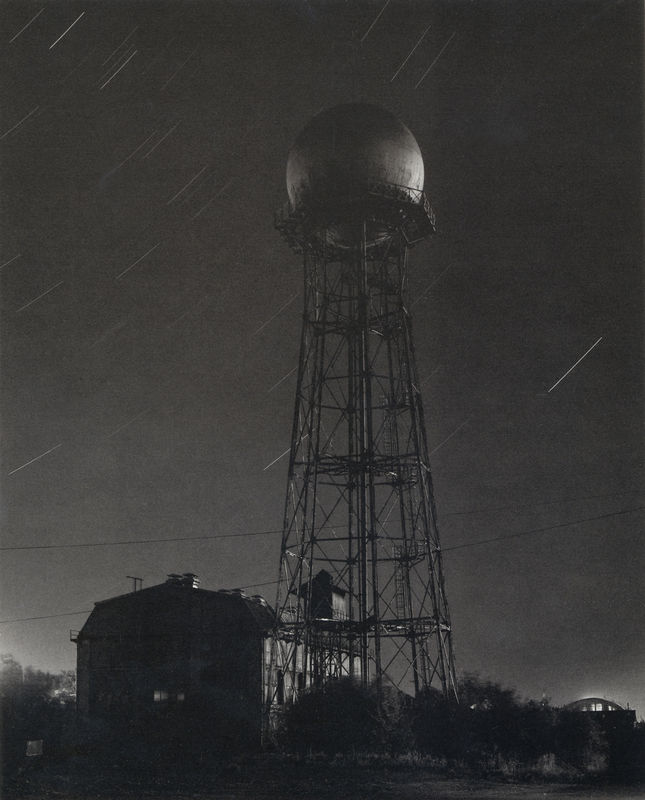
Fastenaekens makes photography, not illustration. He produces conscious images. These images assume responsibility for both form and content.
Gilbert Fastenaekens was born in 1955. His work explores the notion of territory, examining the city, so-called “natural” landscapes, and their transformations through an approach that is both documentary and artistic.
Although a photographer who relies on a radical, even ascetic visual language, entirely removed from any pictorialist effect, Gilbert Fastenaekens is less interested in places themselves than in the visual—and even sensorial—experience they generate. In this sense, like a painter or sculptor, he transforms his subject in favour of what might be called photographic emotion or sensation.
He was early recognised for his Nocturnes (1980–1987), urban landscapes photographed at night using a large-format camera, in clear rupture with the dominant photojournalistic practices of the time. He participated in the DATAR photographic mission on territorial planning in France and received the Kodak Prize for Photographic Criticism in 1986.
He later pursued several commissioned projects on the notion of territory, continuing an attentive observation of the city and landscape, stripped of anecdote and easy sentimentality. From 1990 to 1996, he developed a body of work on Brussels, composed of black-and-white photographs addressing the development of the urban fabric.